

Skilled Trades in TEER 0-3 and TEER 4-5 Pathway for Workforce Priority Stream
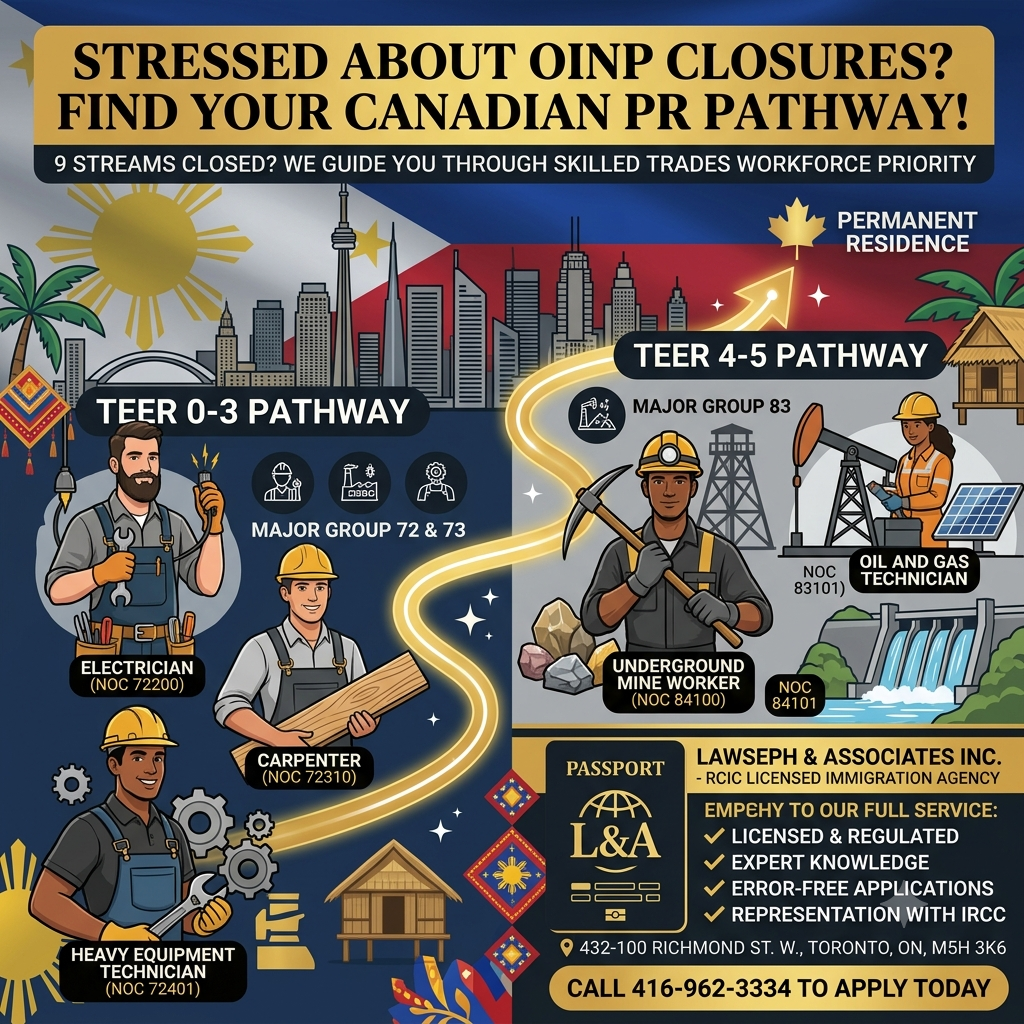

Skilled Trades OWPS
Date: July 29, 2026
Major Group 72 and OWPS
The Major Group 72 of Skilled Trades in Canada falls under the TEER 0-3 Pathway for the Ontario Workforce Priority Stream (OWPS) under the umbrella OINP program. The OINP program is a popular work-based pathway to Permanent Residence (PR) in Canada. Major Group 72 in the Canadian National Occupational Classification (NOC) system covers industrial, electrical, and construction trades (or technical trades depending on the specific NOC revision year), including machinists (NOC 72100), electricians (NOC 72200), plumbers (NOC 72300 ), and carpenters (NOC 72310 ). These TEER 2 jobs usually need 3 or more years of training. All these TEER 2 jobs fall within the TEER 0, 1, 2, 3, Pathway for the Workforce Priority Stream. The average pay for construction trades in Ontario generally ranges from a median of $25 to $44 per hour, depending on specialization, experience, and union status. Entry-level helpers start around $18.50 per hour, while certified journeypersons and specialized trades make upwards of $48 per hour.
Major Group 72 includes Machining and Metal Work: Machinists (NOC 72100), welders (NOC 72106 ), and metal fabricators (NOC 72104) who shape and build metal parts. Electrical and Telecom: Electricians (NOC 72200), power line workers (NOC 72203), and telecommunication line workers (NOC 72204 ). Plumbing and Pipefitting: Plumbers (NOC 72300), steamfitters (NOC 72301), and gas fitters (NOC 72302 ) who install and fix pipe systems. Carpentry and Masonry: Carpenters (NOC 72310), cabinetmakers (NOC 72311 ), bricklayers (NOC 72320) , and plasterers (NOC 73102 ). All the jobs with NOC Codes having a second digit of 2 means in the TEER 2 category. Plasterer is in the TEER 3 category because its second digit is a 3.
Training and Requirements include Apprenticeship: Most roles need a 2 to 5 year apprenticeship program. Alternative Route: Several years of hands-on work plus related school courses. Immigration Use: This group is widely used for programs like the Federal Skilled Trades Program to find skilled workers.
Major Group 73 and OWPS
Major Group 73 in the Canadian National Occupational Classification (NOC) system covers general trades (historically styled as maintenance and equipment operation trades), which involve hands-on work requiring specific technical training, experience, and apprenticeship. It forms a core classification category used for programs like the Federal Skilled Trades Program or Ontario Workforce Priority Stream (OWPS). In Ontario, workers in maintenance and equipment operation trades typically earn $25.00 to $45.00+ per hour (roughly $52,000 to $90,000 per year), depending on the specific trade, certification level, and industry.
Key Categories and Occupations include Mechanics and Repairers: Vehicle mechanics (NOC 72410 ), heavy equipment technicians (NOC 72401), and industrial machinery repair workers (NOC 72400 ). Equipment Operators: Crane operators (NOC 72500 ), heavy equipment drivers (NOC 73400 ), drillers, and blasters (NOC 73402 ). Maintenance Trades: Specialized workers handling facility upkeep, technical plant operations, and general trade tasks. Transportation Trades: Train crew operations and related transit mechanics. These jobs generally require more than two years of formal apprenticeship, specialized college programs, or hands-on on-the-job training. Centennial College, Mohawk College, and Conestoga College. These institutions act as major approved Training Delivery Agents (TDAs) recognized by the government for high-demand careers like truck and coach, automotive service, and heavy equipment repair.
Major Group 83 and OWPS
Major group 83 includes jobs that produce water, minerals, and energy in Canada. Canada mines over 60 different minerals and metals, led by top-produced commodities like gold, coal, and potash. The country is a major global leader and supplier of critical materials used in everyday goods, advanced technology, and clean energy. In Ontario, Underground mine service and support workers are tasked with the production of natural resources. The National Occupational Classification (NOC) code for underground mine service and support workers in Canada is 84100 under the TEER 4 category. For the Workforce Priority Stream, miners must apply for the TEER 5-5 Pathway. You can review full details on the National Occupational Classification Profile. The average pay for underground mine service and support workers in Ontario ranges from about $52,790 to over $105,000 per year, with hourly rates typically falling between $20.00 and $53.10 depending on exact duties and experience.
Other natural resources include production of hydroelectricity, gas, and oil that powers machines and technologies across industry sectors in Ontario. Hydroelectricity powers over 60% of Canada’s total electricity generation, supplying homes, businesses, and heavy industries across the nation. It serves as the primary power source for lighting, heating, and appliances in millions of Canadian households. The NOC code for oil and gas well drillers, servicers, and testers is 83101 under the National Occupational Classification system (TEER 3 category). For the Workforce Priority Stream, natural resource service workers must apply for the TEER 5-5 Pathway. The hourly median wage of about $33.31 to $48.08 per hour, translates to an annual gross salary of roughly $69,000 to $92,000 depending on exact specialization and experience levels.